Used CAT 320GC Price: 2019, 8,500 Hours, $25,500
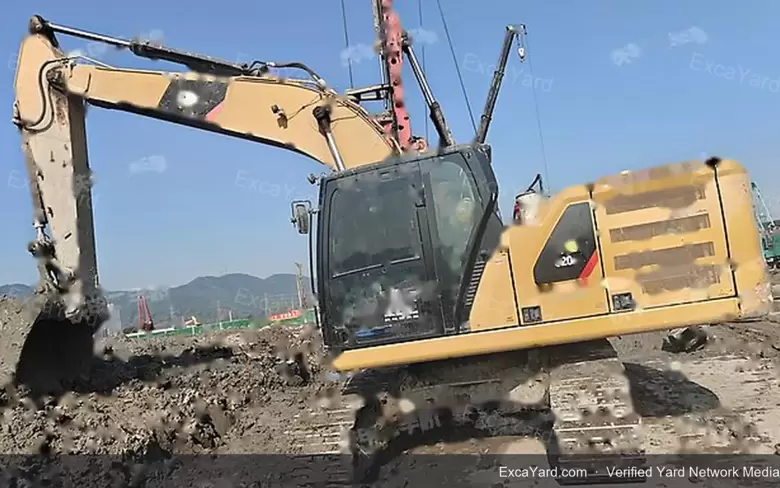
This is a 2019 Caterpillar 320GC with 8,500 hours, Grade B, listed at $25,500 FOB China. The stock number is exy-cate320gc-013. It sits in the same 20–30 t class as the 320D units, which are quoted on request; in-stock 320D units run $12,600 to $22,400.
So the real question is simple: what does the extra $10,500 buy you? A newer year, a lower hour meter, and a different model designation. It does not automatically buy a better machine. The inspection decides that.
| Listing | 2019 320GC | 320D units |
|---|---|---|
| Year | 2019 | 2007 / 2012 / 2013 |
| Hours | 8,500 h | 10,000 / 16,000 / 10,690 h |
| Grade | Grade B | Grade B / C / ask |
| FOB price | $25,500 | On request |
| Size class | 20–30 t | 20–30 t |
The premium in numbers: $10,500 and 7,500 hours
The 2019 320GC is $25,500. The 320D units are quoted on request; this 320GC is $25,500. Against the 16,000-hour 2012 320D, the 320GC has 7,500 fewer meter hours. Against the 2007 320D, it is 12 years newer and 1,500 hours lower.
What you are buying with the premium is not a guarantee. It is a different starting point: a newer year, a lower meter reading, and a better position for resale. Whether that is worth $10,500 depends on the inspection and on how long you plan to keep the machine.
A buyer who keeps a machine for ten years spreads the premium over a long period. A buyer who flips it in one year is making a shorter bet on resale value. Neither is wrong; they are different uses of the same $10,500.
What the newer year and lower hours change
An 8,500-hour 2019 machine has roughly 7,500 fewer hours than the 16,000-hour 2012 320D. That difference can matter in three places:
- Remaining component life: undercarriage, hydraulic pumps and final drives are wear items. Lower hours usually mean more remaining life, but only an inspection can confirm it.
- Downtime risk: a newer machine may need fewer unscheduled repairs in the first year, but that is a probability, not a guarantee.
- Resale: a 2019 unit with 8,500 hours is easier to resell in most markets than a 2007 or 2012 unit with 10,000–16,000 hours.
What it does not change: the need to inspect the undercarriage, hydraulics, engine and pins. A 2019 machine can still have been abused. The year is a starting point, not a verdict.
The other 320GC in the same yard
We hold 2 units of the 320GC. The second unit is listed as Grade A at $16,800. That is $8,700 less than the 2019 Grade B unit. Before you assume the Grade A unit is the better buy, ask for its year, hours and photos. The price difference may reflect age, hours, configuration or condition.
Compare the two units on the same five points:
- Year and hour meter reading.
- Undercarriage photos and wear.
- Hydraulic response on a cold start.
- Engine smoke and blow-by.
- Pins, bushes and boom condition.
If the Grade A unit is older or has much higher hours, the $25,500 2019 unit may be the better long-term buy. If the Grade A unit is genuinely cleaner, the cheaper unit deserves serious attention.
320GC vs 320D: what the model name does and does not tell you
The 320GC and 320D are both listed in the 20–30 t class. This page does not claim a specification advantage we cannot evidence. If you need a detailed comparison of engine, hydraulic system, dimensions or bucket capacity, ask for the spec sheet for the specific unit and compare it with the 320D spec sheet.
For a buyer, the practical difference is often the listing itself: year, hours, grade and price. A 2019 320GC at 8,500 hours and $25,500 is a different risk profile from a 2007 320D at 10,000 hours. Choose the risk you can inspect and afford.

Five checks before you pay $25,500
1. Undercarriage
Ask for close-up photos of the track shoes, links, rollers, idlers and sprockets. At 8,500 hours, wear should be visible but not necessarily worn out. Ask for the percentage if the seller can evidence it.
2. Hydraulic response
Request a cold start-up video showing boom, arm, bucket and travel. Watch for drift, hesitation and abnormal noise. Ask whether the hydraulic pump or any cylinder has been repaired.
3. Engine
Ask for a cold start, not a warm idle. Look for excessive smoke, blow-by and unstable idle. Ask for the service records the seller can evidence.
4. Hour meter and wear
The meter reads 8,500 h. Compare it with the wear on the seat, pedals, joysticks, pins and bushes. A low-hour machine should not show heavy wear. If it does, ask why.
5. Boom, arm and bucket
Ask for photos of the joints and the bucket. Excessive play is a repair cost; a crack is a stop sign until assessed.
Three ways the premium disappears
The $10,500 premium is not permanent. It can be erased by three things, and each one is visible before you pay.
1. A major repair on the newer unit. If the 320GC needs an undercarriage rebuild, a hydraulic pump or an engine repair in the first year, the premium shrinks or disappears. Ask for the inspection evidence before you assume the lower hours mean lower risk.
2. A better machine at the lower price. If the $16,800 Grade A 320GC is genuinely cleaner, or if one of the 320D units passes inspection with a strong undercarriage, the cheaper unit can be the better buy. Price is not condition.
3. Freight and port differences. Two machines in the same yard can still load from different ports, with different inland transport and different schedules. Ask for the port and the freight quote for each unit, not just the FOB price.
If none of these applies, the premium is doing its job: you are paying for a newer, lower-hour machine with better resale. If one of them applies, renegotiate or choose the other unit.
Who this unit fits
This 2019 320GC fits a buyer who wants a lower-hour 20-ton machine and is willing to pay a premium for a newer year, better resale and lower downtime risk. It can suit a contractor adding capacity, a dealer buying for resale, or a buyer who cannot afford a major repair in the first year.
It is not the right choice for a buyer whose budget is fixed at the 320D entry level, or for a project where a 2007–2013 machine is fully acceptable. In that case, compare the 320D units and keep a repair reserve.
Who should not pay the premium
Do not pay the premium if your budget is fixed and the 320D units can do the job. Do not pay it if you cannot inspect the machine before shipping. Do not pay it if the 320GC has a hidden repair that the listing does not mention. The premium is for a lower-risk starting point; if the risk is not lower, the premium is not justified.
Also do not pay it simply because the year is newer. A 2019 machine that was abused can be a worse buy than a 2012 machine that was maintained. The year is one line in the listing; the inspection is the rest of the story.
Shipping, documents and price
This unit can ship in a container or on a flat rack, depending on configuration and route. We load from Nansha / Shekou, Ningbo-Zhoushan and Tianjin; the port is named in your freight quote. Export documents include the invoice, packing list, bill of lading and certificate of origin, issued on request. Payment terms are confirmed per order.
Questions buyers ask
Is the 2019 CAT 320GC available now?
It is listed as in stock in China. Confirm availability on WhatsApp before you commit.
What is the FOB price?
This unit is listed at $25,500 FOB. The final quote is confirmed on WhatsApp.
Why is the other 320GC cheaper?
The other unit is listed as Grade A at $16,800. Ask for its year, hours and photos before comparing. The price difference may reflect age, hours or configuration.
Can I inspect it before payment?
Yes. Send an inspector to the yard in China, or ask us to arrange a third-party inspection and report the findings before you commit.
Can you quote CIF to my port?
Yes. Send your destination port and we will quote FOB or CIF, with the loading port named in the quote.
Compare both 320GC units before you choose.
Ask for the cold-start video, undercarriage photos and inspection notes for exy-cate320gc-013 and the $16,800 Grade A unit. We will confirm availability and the current FOB price on WhatsApp.
Open the 2019 unit · Compare both 320GC units · Request a quote