What the Entry Band Buys in the CAT 320D Class
The entry band does not buy “a CAT 320D”. It buys a particular year, hour reading and grade. In our yard, the entry units are a 2007 unit with 10,000 hours, a 2012 unit with 16,000 hours, and a 2013 unit with 10,690 hours; all three are quoted on request. The choice is about risk, not about the badge.
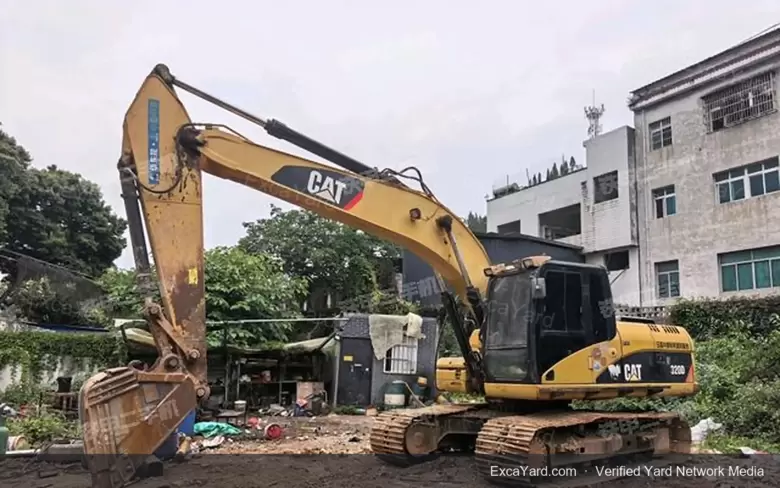
The three 320D choices in the entry band
| Unit | Year | Hours | Grade | What it buys |
|---|---|---|---|---|
| exy-cate320d-048 | 2007 | 10,000 | B | Lower hours, older year |
| exy-cate320d-059 | 2012 | 16,000 | C | Newer year, highest hours, lowest grade |
| exy-cate320d-161 | 2013 | 10,690 | B | Newest year with mid-life hours |
On paper, the 2013 unit is the default: newest year, mid-life hours, Grade B. The 2007 unit has slightly fewer hours but is six years older. The 2012 unit has the newest year of the three but the highest hours and Grade C.
The 320C option
A 2003 320C with 12,111 hours is also available and quoted on request. It is a different generation. It may suit a buyer with a workshop that knows the older platform, but it is not the same risk profile as the 2013 320D. Compare the parts access in your market before choosing it.
What the entry band does not buy
- A low-hour machine. For that, look at the 2019 320GC at $25,500.
- A documented service history. Ask for the records; if they do not exist, price the risk.
- A warranty. The listing is a condition band, not a guarantee.
- A delivered machine. Freight, duty, VAT and clearing are on top.
How to choose within the band
Ask for the same five items on each unit: cold-start video, undercarriage photos, hydraulic cycle, pin/bush photos and the hour-meter image. Rank them by evidence. If two units are close, choose the one with the better undercarriage, not the newer year.
Then add the landed cost and the repair reserve. The FOB price is only the first line.
The landed-cost layer
The FOB price becomes a different number at the destination. Freight, duty, VAT, clearing and inland transport all add to it. The exact figure depends on the port and the taxes; ask for a CIF quote and a broker estimate.
Add the repair reserve. A machine that needs a $4,000 undercarriage costs more than its FOB price suggests. Compare the landed cost plus the reserve, not the FOB price.
What the next $7,000 buys
The 2018 320GC1 at $22,000 buys a newer year and lower hours. The 2019 320GC at $25,500 buys another year and a different model. The extra money is not just “newer”; it is lower risk, better resale and fewer hours. Decide whether the work justifies it.
If the machine will run daily, the newer unit may pay for itself in uptime. If the work is occasional, the entry band may be the rational choice.
A note on resale
The 2013 unit usually has a better resale position than the 2007 or 2012 units. The 320C has a different buyer pool. Ask local dealers which year they can move before you buy for resale.
Who the entry-band unit fits
It fits a buyer who needs a working 20-ton machine and can accept an older year. That may be a contractor with steady utility work, a dealer who can recondition the unit, or an owner who has a mechanic and a spare machine. The entry band is not for a buyer who needs a turnkey unit with no risk.
It also fits a buyer who can inspect. If you cannot send an inspector or travel to the yard, the cheaper band becomes harder to buy safely. The savings can disappear in the first repair.
What to verify before the deposit
Ask for the serial plate, the meter photo, the cold-start video and the undercarriage measurements. Ask for the name on the invoice and the bank account that will receive the payment. Ask what happens if the inspection finds a defect that was not disclosed.
Put the unit number, the price and the inspection condition in the proforma invoice. A deposit should buy a specific machine, not a promise of “a 320D”.
A note on payment and risk
Never pay the full amount before you have seen the machine or an independent report. A deposit is normal; the balance should follow the documents and the loading evidence. If the seller asks for a full payment to a personal account with no contract, stop.
The cheapest unit is not cheap if the payment is unsafe. The price band is only useful when the transaction is structured properly.
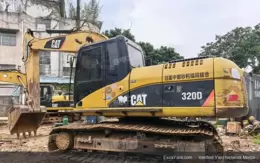
Questions buyers ask
Is this a good price for a 320D?
It can be, depending on the year, hours and condition. The three units above show how wide the range is within the same price.
Should I choose the newest year?
Not automatically. The 2013 unit is the default on paper, but a cleaner 2007 unit can be the better buy if the undercarriage and hydraulics are stronger.
What is the next price step up?
The 2018 320GC1 is $22,000 and the 2019 320GC is $25,500. Both are newer and lower-hour; compare the landed cost and the work before deciding.
Compare the entry units on evidence, not year alone.
Ask for the 2007, 2012 and 2013 units side by side, with photos and videos. We will confirm availability and the current FOB prices on WhatsApp.