Container, Flat Rack or RoRo: How a 20-Ton CAT Actually Ships
A 20-ton excavator is not a pallet. It is tall, wide and heavy, and a standard 40ft container is about 2.35 m wide inside. Many 20-ton machines exceed that width, so the loading decision comes before the freight rate. There are three practical options: a standard container with dismantling, a flat rack or open top, or RoRo.
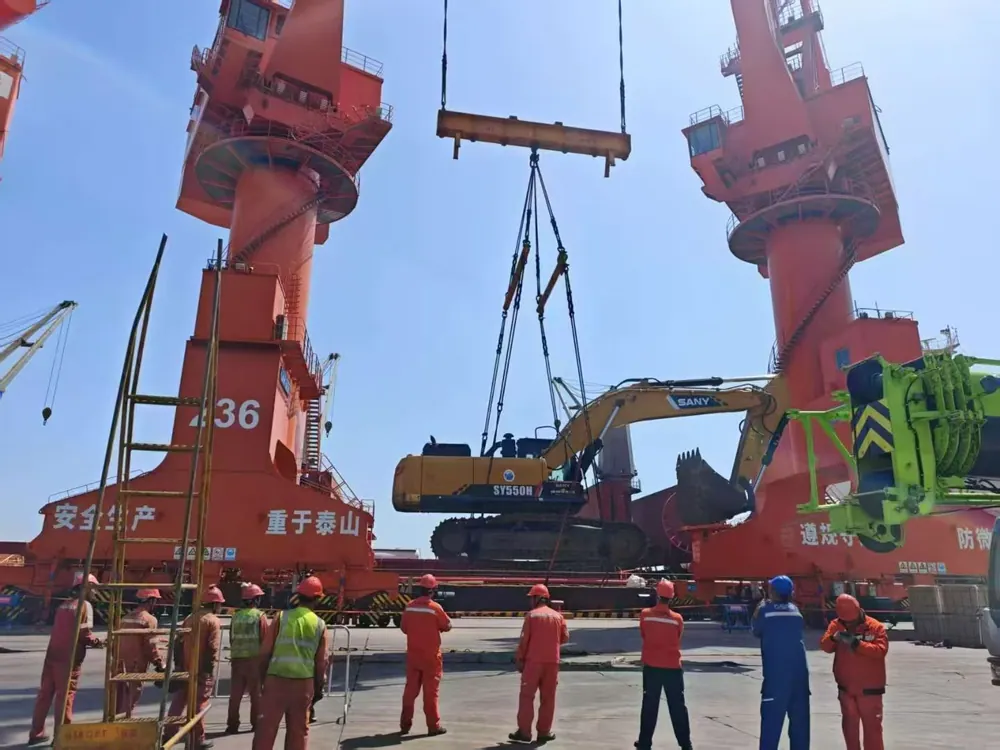
The three options
| Option | How it works | Trade-off |
|---|---|---|
| Standard container | Machine is dismantled or partly disassembled to fit | More labour and reassembly; not all machines fit |
| Flat rack / open top | Machine is lifted onto an open deck and secured | Weather exposure and securing cost; often the practical choice |
| RoRo | Machine is driven or towed onto a roll-on/roll-off vessel | Requires a port with RoRo service; schedule and route dependent |
A forwarder who quotes a container rate without asking for the machine dimensions has not quoted the job.
Flat rack vs container: what actually changes
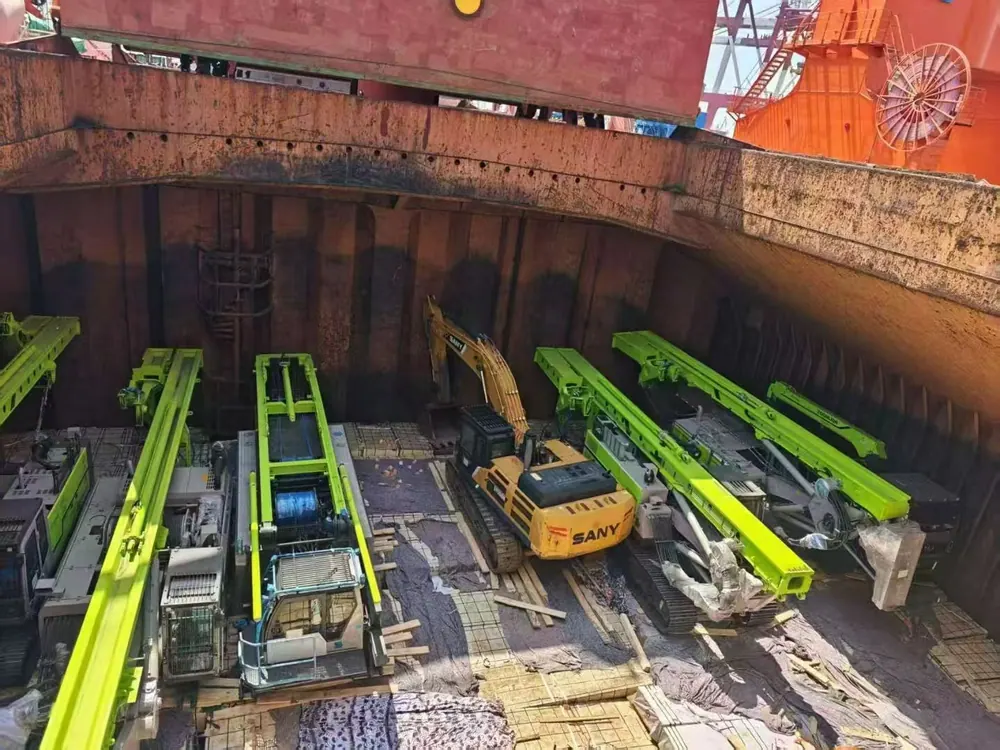
A flat rack is a deck with no roof; the machine is lashed down and the frame is lifted as a unit. An open top keeps the container walls, so the machine sits inside a box and is craned over the wall. Break bulk lifts it straight into the hold with no frame. The difference decides what protects the machine, what the terminal charges and who signs off the securing.
What decides the option
- Width and height: a standard container has a fixed internal width; if the machine is wider, it will not fit without dismantling.
- Weight: the machine, attachments and securing gear must stay within the container or flat-rack limits.
- Port equipment: not every port handles flat racks or RoRo on the same schedule.
- Destination: the receiving port and the inland route may favour one method.
Container vs RoRo excavator: the loading plan in four steps
Shipping a 20 ton excavator is a loading decision before it is a freight rate.
- Measure the actual unit. Boom, arm, bucket, counterweight and any thumb change the transport envelope.
- Check the destination port. No RoRo berth removes one option before price is discussed.
- Book with the dimensions attached. A rate without them is an estimate.
- Agree dismantling, securing and survey in writing: who reassembles, who lashes, who signs off.
RoRo is not a container booking on a different vessel: the carrier wants dimensions, weight, whether the machine is self-propelled or towed, and the port cut-off. Some destinations also require the undercarriage to be free of soil and plant material.
What to ask the forwarder
Ask for the loading method in writing, with the machine dimensions and weight. Ask whether the quote includes securing, lashing, mats and any dismantling. Ask which port and vessel type. Ask what happens if the machine does not fit as planned.
Also ask for photos of the load before departure; they are your evidence if the cargo is damaged.
Insurance and documents
Marine insurance is separate from the carrier’s liability. Ask what the policy covers and whether it includes the loading and unloading. The export documents — invoice, packing list, bill of lading and certificate of origin — should match the machine and the declared value.
If the machine is RoRo, the booking confirmation and the delivery instructions are part of the document set. Keep copies with the inspection report.
What the carrier will ask you
The carrier or forwarder will ask for the machine dimensions, the weight, the attachment list, the centre of gravity if available, and whether the machine can be driven. They may also ask for the lifting points and the transport mode. A quote without those details is an estimate, not a booking.
Send the stock number and the spec sheet. If the machine has a breaker or a thumb, declare it; the packed dimensions change.
Securing and damage
Securing is part of the loading plan. Ask whether lashing, chains, mats and timber are included. Ask who inspects the load and who is responsible if it shifts. Marine insurance should cover the transit, but it does not replace proper securing.
Ask for the lashing plan: number and position of chains or straps, mats at contact points, bucket pinned and lowered, tracks cribbed. A flat rack holds the load by lashing and friction; a container by its floor and lashing points.
Photograph the machine before and after securing. If the cargo is damaged, the photos and the survey report are the evidence.
A note on dimensions
Do not rely on a generic “20-ton” dimension. A 320D with a different boom, bucket or counterweight can have different transport dimensions. The container vs RoRo excavator decision needs the unit’s measurements first.
CAT 320D shipping quotes should be built from those measurements, not from the model name.
Questions buyers ask
Can a 320D fit in a 40ft container?
Sometimes, with dismantling, but many 20-ton machines are wider than the container’s internal width. Confirm the dimensions before assuming a container is possible.
Is RoRo cheaper than a flat rack?
It can be, depending on the route and schedule. Ask for both quotes with the same machine dimensions and destination.
Who arranges the lashing?
The forwarder or the port, depending on the service. Confirm that securing is included in the quote, not added later.
Quote the machine, not just the route.
Send the CAT 320D unit you are considering and ask for the dimensions, the loading method and the port. We will confirm availability and the shipping options on WhatsApp.