Used 2012 CAT 320D at 16,000 Hours: What the Inspection Must Prove
A 2012 Caterpillar 320D with 16,000 hours is quoted on request; in-stock 320D units run from $12,600 to $22,400 FOB China. The condition grade is Grade C. The stock number is exy-cate320d-059.
The price looks attractive until you put it next to the other 320D units in the same yard. A 2013 unit with 10,690 hours and a 2007 unit with 10,000 hours sit in the same yard. Three different years, three different hour readings, each quoted on request. That is the real decision: which one has the least remaining risk, not which one has the lowest sticker.
| Unit | Year | Hours | Grade | FOB |
|---|---|---|---|---|
| exy-cate320d-059 | 2012 | 16,000 h | Grade C | On request |
| 2013 320D (same yard) | 2013 | 10,690 h | Ask for grade | On request |
| exy-cate320d-048 | 2007 | 10,000 h | Grade B | On request |
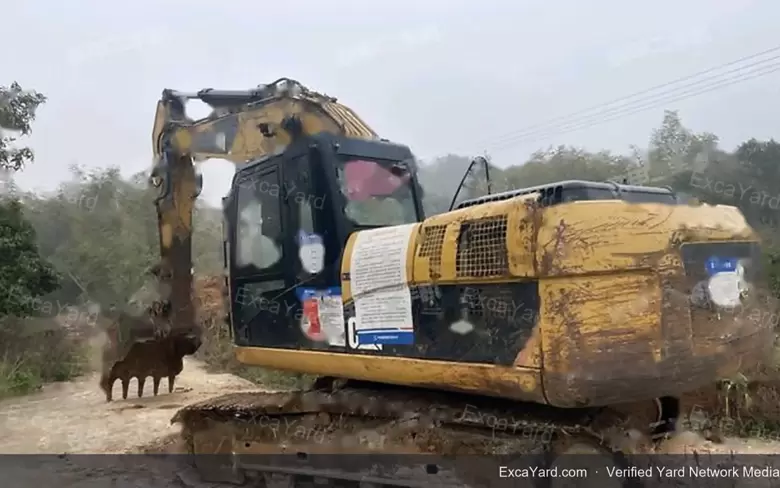
What 16,000 hours means in practice
Sixteen thousand hours is a lot for a 20-ton excavator. It does not automatically make the machine a bad buy, but it changes the questions:
- How much of the undercarriage has already been replaced?
- Has the hydraulic pump or any major component been rebuilt, and can it be evidenced?
- Does the engine start clean from cold, or does it need ether or a warm-up?
- How much play is in the boom, arm and bucket pins?
- Is the asking price low enough to leave a repair budget?
If the answer to those questions is “we don’t know”, the asking price is not the real cost. The real cost is the quote plus whatever you discover after arrival.
The 5,310-hour gap in numbers
Put the two 320D units side by side. The 2012 machine has 16,000 hours; the 2013 machine has 10,690. The difference is 5,310 meter hours. At a typical 2,000 hours a year, that is about 2.6 years of work before the 2013 unit reaches the same reading.
Compare the meter readings, not the sticker: the 2012 unit shows 16,000 hours and the 2013 unit shows 10,690. That gap does not prove the higher-hour machine is better value; it only shows there are fewer remaining hours. The inspection decides whether those hours were hard or easy.
If both machines pass the same inspection, the lower-hour unit has more remaining life for the same price. If the lower-hour unit fails on undercarriage, hydraulics or engine, the arithmetic changes. That is why the video and the undercarriage photos matter more than the year on the listing.

The comparison that matters: 2012/16,000 h vs 2013/10,690 h
Both units are quoted on request. The 2013 unit shows 5,310 fewer hours on the meter. That does not prove it is in better condition, but it is a material difference. Before you choose the 2012 unit because it is “the same price”, ask for both videos side by side.
What to compare:
- Cold start: smoke, blow-by, idle stability.
- Hydraulic cycle: speed, drift, noise, cylinder leaks.
- Undercarriage photos: track shoes, links, rollers, sprockets.
- Pins and bushes: play at the bucket, arm and boom.
- Sheet metal and cabin: cracks, welds, rust, missing panels.
If the 2013 unit is cleaner on those five points, the lower-hour machine is the better buy even at the same price. If it is not, the 2012 unit may still be the right machine for a buyer who can handle the repairs.
What high hours do to resale and downtime
High hours affect two things beyond the purchase price: resale and downtime. A 16,000-hour 320D is harder to resell in markets that expect lower-hour machines, and it may sit longer when you try. In daily use, the risk is not that the machine fails immediately; it is that a component you did not inspect fails in the first months, when the machine is already on site and the repair is urgent.
That risk is manageable if you price it. Before you commit, ask yourself three questions. Can I inspect the machine before shipping? Do I have a local mechanic who can handle the likely repairs? Does the total of purchase, freight and first-year repairs still make sense against a lower-hour unit? If the answer to any of these is no, the asking price is not the real cost.
For a dealer with a workshop, a high-hour unit can be a good buy because the repair cost is known and controllable. For an end user with no workshop and a tight schedule, the same unit can be a false economy. The machine is the same; the buyer is different.
Who should consider a 16,000-hour 320D
This unit can make sense for:
- A contractor who needs a 20-ton machine for lower-utilization work and can inspect and repair it locally.
- A dealer who buys on price and has a workshop.
- A buyer in a market where a high-hour 320D is normal and parts are available.
It is a poor fit for a fleet that needs high availability, a buyer who cannot inspect before shipping, or a project that cannot tolerate downtime. For those cases, compare the lower-hour 2013 unit or a newer 320GC and pay for the lower risk.
Inspection: what to ask for on this unit
Ask for a cold start-up video of exy-cate320d-059, not a warm idle. Ask for close-up photos of the undercarriage and the boom/arm joints. Ask whether the hydraulic pump, cylinders or engine have been repaired, and request the evidence the seller can provide. If you need an independent view, send a third-party inspector to the yard in China; we can arrange it and report the findings before you commit.
We do not publish a maintenance history we cannot evidence. That is deliberate. On a 16,000-hour machine, the inspection is more valuable than a polished description.
The evidence request, item by item
Send the stock number and ask for the same evidence set on both units. A seller who can provide it is easier to deal with than one who sends only a catalogue.
| Item | What to ask for | Why it matters |
|---|---|---|
| Cold start | Video from cold, showing smoke and idle | Reveals blow-by and starting problems |
| Hydraulics | Full boom/arm/bucket cycle, travel | Shows response, drift and noise |
| Undercarriage | Track shoes, links, rollers, sprockets | Largest wear item on a 20-ton unit |
| Pins and bushes | Bucket, arm and boom joints | Play is a repair cost |
| Structure | Boom, arm, frame, cabin photos | Cracks and welds are stop signs |
| Paperwork | What the seller can evidence | Do not accept a verbal history |
Shipping, documents and price
This unit can be loaded in a container or on a flat rack, depending on the configuration and route. We load from Nansha / Shekou, Ningbo-Zhoushan and Tianjin; the port for this specific machine is named in your freight quote. Export documents include the invoice, packing list, bill of lading and certificate of origin, issued on request. Payment terms are confirmed per order.
Questions buyers ask
Is this a good price for a 2012 CAT 320D with 16,000 hours?
It can be, if the undercarriage, hydraulics and engine are serviceable and the repair budget still leaves you below the price of a lower-hour unit. It is not a good price if the machine needs a major repair immediately.
Can I compare it with the 2013 unit at the same price?
Yes. Ask for both stock numbers and request the same photo and video set for each. The 2013 unit has 10,690 hours on the meter; confirm its grade and condition before you compare.
Can I inspect before payment?
Yes. You can send an inspector to the yard in China, or ask us to arrange a third-party inspection and report the findings before you commit.
Do you provide a warranty?
No warranty is stated in this listing. Ask for the inspection evidence and confirm the terms in writing before you pay.
Which port does it ship from?
Nansha / Shekou, Ningbo-Zhoushan or Tianjin, depending on the unit and destination. The port is named in your freight quote.
Compare the two 320D units before you choose.
Ask for the cold-start video, undercarriage photos and inspection notes for exy-cate320d-059 and the 2013 320D with 10,690 hours. We will confirm availability and the current FOB price on WhatsApp.
Open the 2012 unit · Compare all 320D units · Request a quote