Bucket, Breaker or Thumb: Choosing Attachments for a CAT 320D
An attachment that does not match the machine is an expensive mistake. The pin diameter, the hydraulic flow and the weight all have to agree with the carrier. This guide covers CAT 320D attachments, but the method applies to any 20-ton excavator.
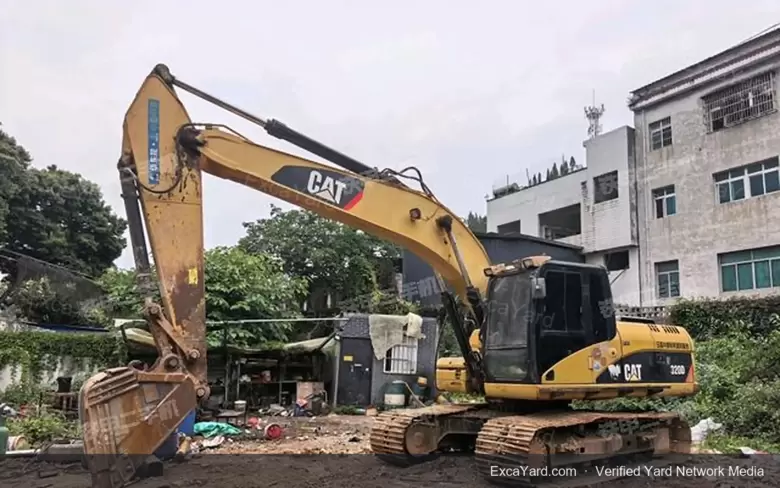
The four common attachments
| Attachment | Best for | What to check |
|---|---|---|
| Digging bucket | General excavation, trenching | Pin diameter, width, capacity, teeth |
| Hydraulic breaker | Rock, concrete, demolition | Operating weight, flow, pressure, carrier class |
| Thumb | Handling logs, debris, rock | Mounting, pin size, hydraulic or mechanical |
| Quick coupler | Frequent attachment changes | Pin size, locking system, safety pin |
A ripper, a sieve bucket or a compactor may also fit, but the same three checks apply: pin, flow and weight.
Pin size comes first
Ask the seller for the bucket pin diameter and the arm/bucket dimensions. A 320D attachment from another machine may look right and not fit. If the pins are worn, a new attachment can accelerate the wear on the boss.
What to measure before you compare CAT 320D attachments
The attachment bolts to a specific bucket linkage, not to “a 320D”. Measure:
- Pin diameter at three points, to catch ovality.
- Boss width between the bucket ears.
- Pin centre distance, which sets the linkage geometry.
- Coupler stack: a CAT 320D quick coupler adds height and changes the pin interface.
Send the numbers with photos. “320-size” is a marketing phrase, not a fitment.
If you are buying the attachment with the machine, ask for photos of the fitment and the pins. If you are buying separately, send the pin size and the machine serial to the attachment supplier.
Hydraulic flow and pressure
A breaker or a hydraulic thumb needs the right flow and pressure. An attachment designed for a smaller carrier may run poorly or overheat; one designed for a larger carrier may not reach its rated performance. Ask for the attachment’s flow and pressure range and compare it with the machine’s specification.
Do not rely on the model name alone. A “320-size” breaker from one supplier may not match another’s specification.
Weight and balance
A heavy attachment reduces the machine’s lifting capacity and can stress the boom. Ask for the attachment weight and check it against the carrier’s recommended limits. A quick coupler adds weight too; include it in the total.
Buying with the machine vs later
Buying the attachment with the machine can simplify the fitment and the shipping, but it can also lock you into a worn bucket or a breaker that does not suit your work. If the attachment is critical to the job, specify it before the machine ships.
If you buy later, confirm the pin size, the flow and the weight before you order. A cheap attachment that does not fit is not cheap.
What a used attachment is worth
A used CAT 320D bucket is worth what its remaining steel and fitment are worth. Check the cutting edge, the side plates and the pin bosses. A bucket that has been hard-faced repeatedly may still work, but the geometry may be altered. A used breaker needs a service history and a test; a breaker that “works” on the phone can fail on the first day.
Do not buy an attachment on photos alone if it is critical to the job. Ask for a video of it working on a machine of the same class.
Fitment checklist
| Item | What to measure |
|---|---|
| Pin diameter | Bucket and arm pins; worn or standard |
| Mounting width | Between the bosses; quick coupler interface |
| Hydraulic flow | Breaker or thumb requirement vs machine output |
| Weight | Attachment plus coupler vs lifting limit |
Breaker sizing in practice
A breaker is matched on four numbers, not the carrier’s weight class: operating weight, chisel diameter, required oil flow and required pressure. The machine also needs a circuit plumbed to the stick, with the right hose size and a return path.
A breaker that is too large puts shock into the boom and stick; one that is too small will not break the material. Compare the spec sheet with the machine’s auxiliary hydraulic specification before you compare prices.
On a used breaker, ask for a video of it working on a machine of the same class, and when the accumulator and the chisel were last changed.
Thumb: weld-on, pin-on or hydraulic
A weld-on thumb is permanent; it changes the stick and cannot be removed without cutting. A pin-on thumb uses existing bosses and can be swapped, but adds weight at the end of the stick. A hydraulic thumb needs a circuit and a control. The same pins carry an excavator breaker, thumb or coupler; only the load changes.
Questions buyers ask
Will a bucket from another 20-ton machine fit?
Only if the pin diameter and the mounting dimensions match. Do not assume that “20-ton” means universal.
Can I ship attachments with the excavator?
Yes, but the weight and the packing change the loading plan. Declare the attachments on the packing list and in the freight quote.
Do you supply attachments?
We can quote attachments with the machine or source them to your specification. Send the pin size and the required flow.
Match the attachment to the machine, not the brochure.
Send the 320D unit you are considering and ask for the pin size, hydraulic flow and attachment options. We will confirm availability on WhatsApp.